
Supply Chains
Shipping It Generic and Finishing It Late
Holding stock in a half-built state solves a problem that neither more inventory nor better forecasting can. The technique is called postponement.
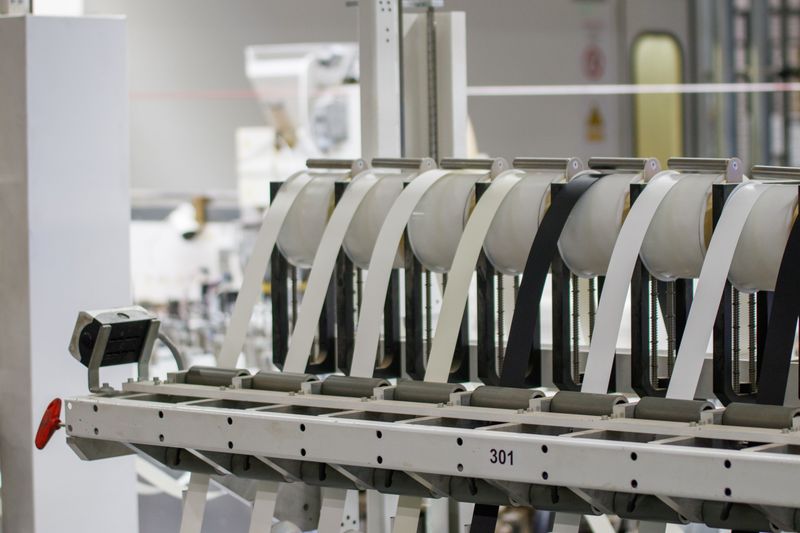
Everything here earned its place by changing an outcome. Nothing about late-stage product differentiation is included to round the number up.
What matters most
- Aggregate demand across variants is more predictable than demand for each one.
- Delaying differentiation lets one stock unit serve several final products.
- Postponement requires a product design that supports late configuration.
The problem variety creates
A product sold in a dozen configurations across a dozen markets multiplies the number of items that must be forecast and stocked. Forecast error is proportionally larger for each individual variant than for the family as a whole, because random variation partly cancels in aggregate.
The practical result is simultaneous shortages of some variants and excess stock of others, in the same warehouse, from the same production run. Adding stock across all variants is expensive and does not address the underlying cause of the mismatch. The alternative is to stop committing to a variant until later, which is what postponement does.
Statistical pooling in plain terms
Holding one generic item that can become any of five final products requires less safety stock than holding five separate items. The saving comes from the fact that a shortage in one variant can be covered by the same pooled stock that covers the others.
The effect strengthens as the number of variants grows and as their individual demands become less correlated. This is the same principle that makes a shared spare parts pool more efficient than separate pools at each site. It is a property of variability rather than a management technique, which is why it holds across very different industries.
Where the final step happens
Postponement moves differentiating operations downstream, often into a distribution centre rather than the original factory. Typical late operations include installing region-specific power supplies, adding language packaging, applying labels and loading software.
Some operations move all the way to the point of sale, where configuration happens after the customer has chosen. The further downstream the step moves, the greater the pooling benefit and the more capability the downstream site requires. Choosing the right point is a balance between inventory saving and the cost of distributing that capability.
Design has to cooperate
Postponement is impossible unless the product is architected so that differentiation can occur late without disturbing what came before. That means modular interfaces, a common platform across variants and differentiating features that are genuinely separable. Products whose variants differ in internal construction cannot be postponed regardless of how the supply chain is organised.
Upstream of that, the decision therefore belongs in product architecture rather than in logistics, and it must be made early. Firms that discovered postponement after designing the product usually cannot apply it to that generation.
The regulatory dimension
Late-stage operations can affect customs treatment, because processing performed after import may change classification or origin. Work carried out in a bonded facility or a free zone may occur before goods formally enter for consumption, with different consequences. Labelling and safety marking requirements often specify who may apply them and where, which constrains how late the step can be.
These rules differ between jurisdictions, so a structure that works in one market may not transfer to another. Checking the customs treatment before designing the flow avoids expensive rework of a network already built.
Trade data lags by months and is revised afterwards, so recent figures are provisional.
What it does not fix
Postponement reduces variant-level forecast risk without reducing total demand risk for the product family. If the platform itself is wrong, holding it generically simply means holding the wrong thing in a more flexible form. It adds handling steps and a facility capability, both of which carry real cost that has to be offset by the inventory saving.
At port, for low-variety products with stable demand, the technique adds complexity for very little benefit. The gain scales with variety and volatility, so applying it selectively rather than universally is the sensible approach.
Everything above, in order of what to do first
- The problem variety creates. A product sold in a dozen configurations across a dozen markets multiplies the number of items that must be forecast and stocked.
- Statistical pooling in plain terms. Holding one generic item that can become any of five final products requires less safety stock than holding five separate items.
- Where the final step happens. Postponement moves differentiating operations downstream, often into a distribution centre rather than the original factory.
- Design has to cooperate. Postponement is impossible unless the product is architected so that differentiation can occur late without disturbing what came before.
- The regulatory dimension. Late-stage operations can affect customs treatment, because processing performed after import may change classification or origin.
- What it does not fix. Postponement reduces variant-level forecast risk without reducing total demand risk for the product family.
The takeaway
Hold stock in the form that can become the most things. Variety is a forecasting problem before it is a production one.
Somebody pays the tariff. The argument is only ever about who.
Questions readers ask
Does postponement work for food products?
In limited forms, such as late packaging or labelling, subject to shelf life and food safety rules. Shelf life constrains how long generic stock can be held before final processing.
Is postponement the same as build to order?
They are related but not identical. Build to order starts production after an order arrives, while postponement holds semi-finished stock ready for a short final step.
Also by Wei-Lin Tan
- Rules of Origin: How a Product Gets a NationalityTariffs & Policy
- The Classification Code That Decides What an Import CostsTariffs & Policy
- Anti-Dumping Duties and the Problem of Proving a Price Is Too LowTariffs & Policy
- Why Raw Materials Enter Cheap and Finished Goods Do NotTariffs & Policy


