
Supply Chains
Why Suppliers Cluster Within an Hour of Each Other
Component makers rarely spread evenly across a country. They pile up around each other, and the reasons are older than modern logistics.
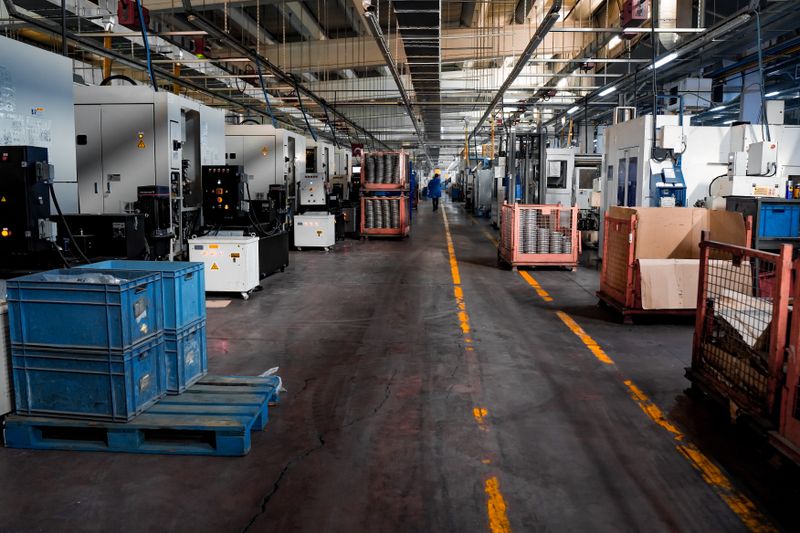
Everything here earned its place by changing an outcome. Nothing about geographic clustering of suppliers is included to round the number up.
What matters most
- Clusters share labour pools, specialised inputs and rapid knowledge transfer.
- Proximity allows same-day iteration that distance makes impossible.
- The advantage is collective, which makes individual relocation difficult.
The observed pattern
Industries concentrate geographically far more than the distribution of population, land or raw materials would predict. Furniture, ceramics, electronics assembly, textiles and precision machining all show the pattern in different countries and eras. Within a cluster, a manufacturer can reach dozens of specialised suppliers and service providers within a short drive.
The concentration persists across generations of technology, which suggests the cause is not tied to any particular process. Explanations that rely on a single founding accident cannot account for how durable and self-reinforcing these places are.
A labour pool that works both ways
A concentration of employers creates a deep pool of workers with the specific skills that industry needs. Workers move to such places precisely because a job loss does not require relocation, which reduces the risk of specialising. Employers benefit because hiring a trained machinist or a pattern cutter is a matter of weeks rather than a training programme.
Upstream of that, the arrangement is self-reinforcing: more employers attract more workers, and more workers attract more employers. A single firm relocating loses access to that pool and has to build its own, which is slow and expensive.
Specialised inputs and services
Clusters support suppliers of specialised inputs, tooling, maintenance and testing that no single firm could sustain alone. A mould maker, a heat treatment shop and a metrology service all need enough customers within reach to stay busy.
Upstream of that, where that density exists, a manufacturer can outsource narrow tasks cheaply instead of holding capability internally. Where it does not, the same manufacturer must own more of the process, which raises its capital requirement significantly. This is the mechanism that makes an isolated factory structurally more expensive than an identical one inside a cluster.
Knowledge that travels short distances
Technical know-how moves through conversation, staff movement and observation far more than through documents. Proximity multiplies those channels, which is why improvements diffuse quickly within clusters and slowly between them.
At port, the literature calls these knowledge spillovers, and they are the hardest of the three classic advantages to replicate deliberately. They also explain why a cluster can retain an edge long after its original cost advantage has disappeared. Documentation transfers what people know they know; proximity transfers the rest.
The speed advantage nobody costs
When a supplier is an hour away, a prototype can be revised in a day and a defect investigated the same morning. That iteration speed compresses development timelines in ways that no amount of communication technology fully substitutes for.
Once the order book turns, for products with frequent design changes, the ability to iterate quickly can matter more than the unit cost of the parts. Firms that moved production far from their engineering function often rediscover this during their next product launch. Development speed is a real cost that rarely appears in the sourcing comparison that prompted the move.
Why clusters are hard to recreate
Building a cluster means assembling several interdependent pieces at once, none of which is viable without the others. Industrial policy has attempted this repeatedly with results ranging from durable success to expensive industrial parks with few tenants.
Anchoring an initial large plant is the usual approach, on the reasoning that suppliers will follow a guaranteed customer. Whether the surrounding ecosystem develops depends on whether those suppliers can eventually serve other customers too. Clusters that depend on a single anchor remain fragile in a way that mature ones are not.
Everything above, in order of what to do first
- The observed pattern. Industries concentrate geographically far more than the distribution of population, land or raw materials would predict.
- A labour pool that works both ways. A concentration of employers creates a deep pool of workers with the specific skills that industry needs.
- Specialised inputs and services. Clusters support suppliers of specialised inputs, tooling, maintenance and testing that no single firm could sustain alone.
- Knowledge that travels short distances. Technical know-how moves through conversation, staff movement and observation far more than through documents.
- The speed advantage nobody costs. When a supplier is an hour away, a prototype can be revised in a day and a defect investigated the same morning.
- Why clusters are hard to recreate. Building a cluster means assembling several interdependent pieces at once, none of which is viable without the others.
The takeaway
A factory buys equipment; a cluster supplies everything around it. Relocation costs are dominated by the second.
Capacity takes a decade to build and one quarter to look like a mistake.
Questions readers ask
Does cheap communication make clusters less important?
Less so for standardised, stable production and hardly at all for development-intensive work. The knowledge that clusters transmit best is the kind that resists being written down.
Can a firm capture cluster benefits without being in one?
Partially, through resident engineers, frequent travel and local partners. It reduces the gap in iteration speed without closing it.
Also by Wei-Lin Tan
- Rules of Origin: How a Product Gets a NationalityTariffs & Policy
- The Classification Code That Decides What an Import CostsTariffs & Policy
- Anti-Dumping Duties and the Problem of Proving a Price Is Too LowTariffs & Policy
- Why Raw Materials Enter Cheap and Finished Goods Do NotTariffs & Policy


