Markets & Commodities
Why a Manufacturer Buys Inputs Before It Needs Them
Forward purchasing is not a bet on prices. It is a way of matching an input commitment to a customer commitment already made.
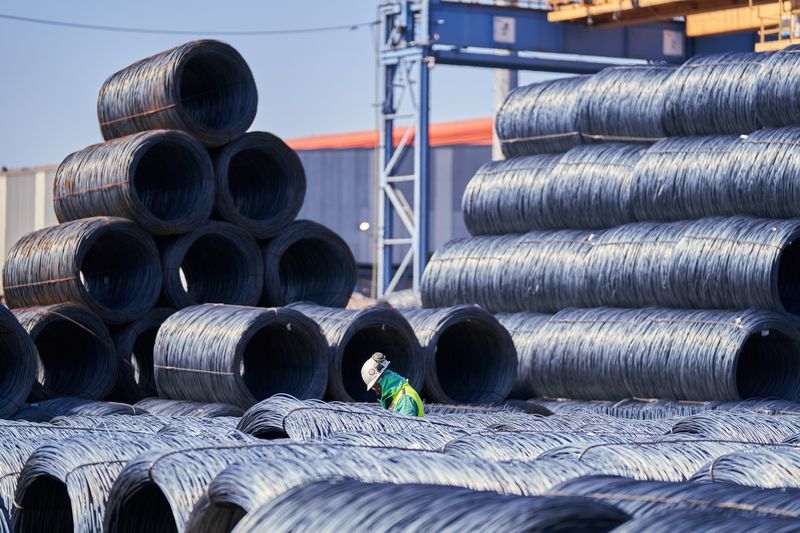
The theory of forward purchasing of production inputs is well covered elsewhere. This is about the version you meet in practice.
What holds up in practice
- Quoting a fixed price to a customer creates an input exposure that must be managed.
- Physical forward contracts secure both price and supply.
- The objective is matching commitments, not predicting prices.
The exposure a quotation creates
A manufacturer quoting a fixed price for delivery in six months has committed revenue without having committed its input cost. If material prices rise before the input is purchased, the margin on that order shrinks or disappears. The exposure was created by the sales commitment rather than by anything the purchasing department did.
Forward purchasing exists to close that gap by fixing the input cost against the order already sold. Framed this way it is a matching exercise rather than a position taken on the market.
Physical forward contracts
The simplest approach is a contract with a supplier for delivery at a future date at an agreed price. This secures both the price and the physical material, which matters when supply as well as cost is uncertain. It requires a supplier willing to commit, which is easier in comfortable markets than in tight ones.
Volume flexibility clauses, allowing some variation around the committed quantity, are common and worth negotiating. The main risk is that the underlying sales order changes, leaving a commitment with no corresponding use.
Index-linked pricing as an alternative
Rather than fixing a price, a manufacturer can link its selling price to the same index as its input cost. This passes the volatility through to the customer and removes the need to fix anything in advance. It requires customers who accept variable pricing, which is normal in some industries and impossible in others.
Over a shipping cycle, where accepted, it is administratively simpler and removes the risk of an unmatched commitment entirely. The commercial question is whether the customer relationship can carry that structure.
Why over-purchasing hurts
Buying more forward cover than the underlying business requires converts a matching exercise into a position. If prices fall, the firm is committed above market while competitors buy at the lower level, which is a competitive problem rather than an accounting one. This is why disciplined firms define coverage limits tied to committed order volumes rather than to a price view.
Governance around those limits matters, because the temptation to extend cover rises exactly when prices are moving.
The discipline is about staying matched rather than about being right on direction.
Inventory as a form of cover
Holding physical stock fixes cost for the quantity held and provides supply security at the same time. It costs storage and capital, and it carries obsolescence risk for materials with limited shelf life or changing specifications. For materials where forward contracts are unavailable, inventory is often the only practical form of cover.
Upstream of that, the comparison between forward contracting and inventory is a cost and risk comparison rather than an obvious choice. Both approaches address the same exposure with different balance sheet consequences.
Trade data lags by months and is revised afterwards, so recent figures are provisional.
What this is not
None of this constitutes a view on where commodity prices will go, and firms that adopt one have changed activity entirely. Financial instruments used for hedging carry their own risks, margin requirements and accounting treatment, and they need specialist handling. Any firm considering financial hedging rather than physical contracting should take qualified professional advice before doing so.
On the manifest, the distinction between matching a commercial exposure and taking a market position is the one that matters most. Firms that blur it usually discover the difference at the worst point in a cycle.
The takeaway
Match cover to commitments, not to a price view. This is general information about procurement practice and is not investment, hedging or financial advice.
Capacity takes a decade to build and one quarter to look like a mistake.
Questions readers ask
Is forward purchasing speculation?
Not when the volume matches a commercial commitment already made. It becomes a position when coverage exceeds what the underlying business requires.
Should a small manufacturer use financial hedging instruments?
That depends on its exposure, its capabilities and its access to qualified advice. Physical forward contracts and inventory are simpler tools that address the same exposure for many businesses.
Also by Daniel Okonjo
- What a Bonded Warehouse Is Actually ForShipping & Logistics
- The Empty Container ProblemShipping & Logistics
- The Floor Under Every Manufactured PriceMarkets & Commodities
- Why Industrial Buyers Almost Never Pay the Spot PriceMarkets & Commodities