Markets & Commodities
Why Some Goods Have a Shipping Radius
Freight cost relative to product value quietly decides which goods trade internationally and which never leave their region.
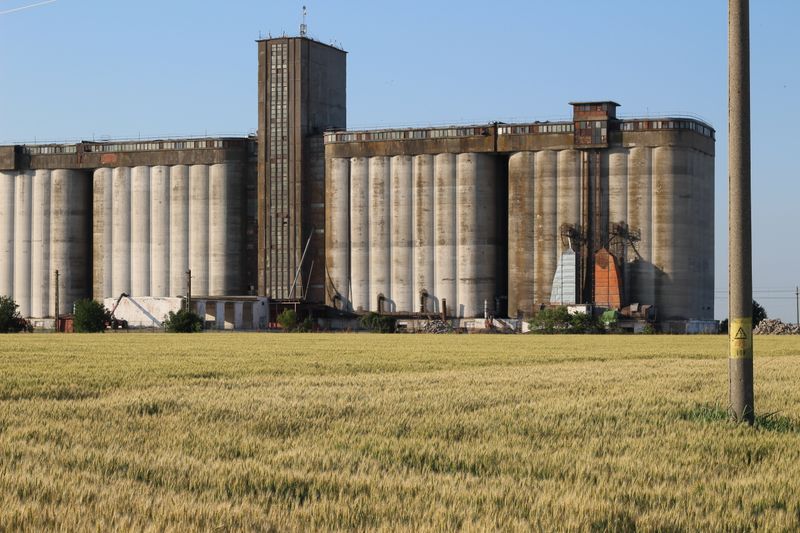
This looks at freight cost relative to product value from the practical end — what holds up once conditions stop being ideal.
What holds up in practice
- Freight as a share of delivered value determines how far a good can travel economically.
- Low value density goods have effectively regional rather than global markets.
- Falling transport costs expand the radius and change which producers compete.
The ratio that decides everything
Divide the cost of moving a good by its value and you have the single best predictor of how far that good will ever travel. Goods with high value per tonne can absorb long-distance freight without it materially affecting how competitive they are on arrival.
Goods with low value per tonne cannot, and their markets stay stubbornly regional however efficient their producers eventually become. Cement, aggregates, bricks, bottled water and structural concrete products all illustrate the pattern in different industries. The physical properties of the product, rather than any trade policy, determine the geography of the market it competes in.
Why regional markets behave differently
In a market defined by a transport radius, competition is local and the number of participants is usually small. Prices in adjacent regions can differ substantially without any trade occurring at all, because freight exceeds the price gap between them. Capacity decisions are made regionally, which means local shortages and surpluses persist far longer than they would in a globally traded good.
Producers in these markets compete on logistics, location and delivery reliability as much as on production cost. The economics resemble a network of connected local markets rather than one international market with a single clearing price.
The radius is not fixed
Improvements in transport efficiency extend the distance a good can travel economically before freight overwhelms the value being shipped. Bulk handling equipment, larger vessels and better inland connections have all extended those radii for various commodities over time. When a radius extends far enough to overlap a neighbouring region's, two previously separate markets suddenly become one connected market.
At port, that connection changes prices in both, sometimes sharply, and reorders which producers are competitive and which are not. These transitions are among the more consequential and least discussed events in the history of commodity markets.
Processing to raise value density
One response to a freight constraint is to process material closer to the source, raising value per tonne before shipping. Concentrating ore, drying agricultural products and refining locally all reduce the weight shipped per unit of value. Whether this is worthwhile depends on processing cost, energy availability and the tariff treatment of processed goods.
Over a shipping cycle, tariff escalation works directly against it, which is one of the clearest links between trade policy and industrial location.
The interaction between freight economics and tariff structure decides a great deal about where processing happens.
Backhaul changes the arithmetic
A good that would not bear full freight can sometimes move on a route where the return leg is nearly empty. This is why some low-value materials travel surprising distances, following imbalanced trade lanes rather than logic about distance.
The availability of cheap backhaul is a property of the route rather than of the product. It can change as trade patterns evolve, occasionally removing the viability of a trade that had existed for years. Businesses built on cheap backhaul carry a dependency on somebody else's trade imbalance.
Trade data lags by months and is revised afterwards, so recent figures are provisional.
Applying it to a sourcing decision
Calculate freight per unit of finished product, not per container, and express it as a percentage of delivered value. That number tells you immediately whether distance is a serious factor or a rounding error in the comparison. For products above a few per cent, freight volatility becomes a genuine planning issue rather than a background cost.
Line by line in the tariff schedule, for products well below it, sourcing decisions should be made on other grounds entirely. The calculation takes minutes and prevents a great deal of misdirected analysis.
The takeaway
Freight as a percentage of delivered value is the number to calculate first. This is general information about trade economics, not investment advice.
Somebody pays the tariff. The argument is only ever about who.
Questions readers ask
Why is cement rarely traded over long distances?
Because its value per tonne is low relative to the cost of moving it, so freight quickly exceeds any production cost advantage. Coastal plants with cheap sea freight are a partial exception.
Does cheaper freight always expand trade?
It expands the set of goods that can travel economically, which historically has increased trade in lower-value products. The effect is largest for goods near the threshold.
Also by Daniel Okonjo
- What a Bonded Warehouse Is Actually ForShipping & Logistics
- The Empty Container ProblemShipping & Logistics
- The Floor Under Every Manufactured PriceMarkets & Commodities
- Why Industrial Buyers Almost Never Pay the Spot PriceMarkets & Commodities