Shipping & Logistics
Bigger Ships Need Bigger Everything
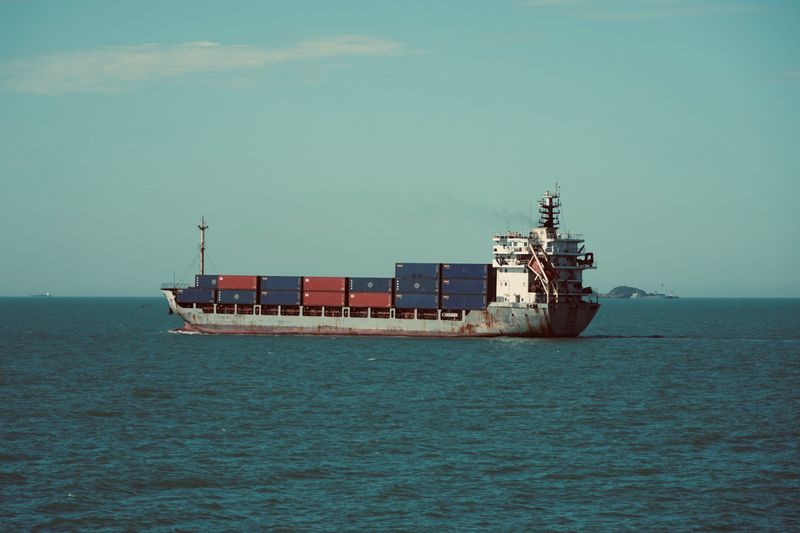
Vessel economics push relentlessly towards size. The costs of that push land mostly on infrastructure nobody on the ship pays for.
Comparisons of the economics of vessel size usually pick a winner. This one picks the circumstances, which is more useful.
The difference in one place
- Cost per slot falls with vessel size, which drives ordering towards larger ships.
- Larger vessels require deeper channels, longer quays and taller cranes.
- Fewer, larger calls concentrate cargo peaks onto terminals and inland networks.
Why size keeps rising
A larger vessel carries more containers without a proportional increase in crew, fuel per slot or capital cost per slot. Hull resistance does not scale linearly with capacity, so fuel consumed per container carried falls as ships get bigger. Those savings accrue to the operator directly, which makes ordering larger tonnage individually rational at each renewal.
Competitive pressure reinforces it, because an operator with higher slot costs than rivals cannot match their pricing. The result has been successive generations of larger vessels on the highest-volume routes.
Where the costs go instead
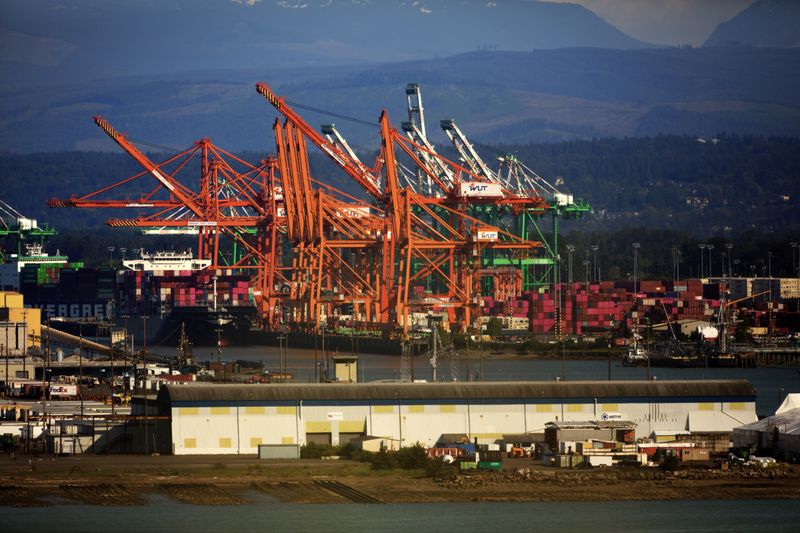
Deeper draught requires channel dredging and maintenance, which is usually a public or port authority cost rather than a carrier one. Greater beam and length require longer quays, stronger structures and cranes with longer outreach and higher lift. Yard capacity must expand to absorb a much larger exchange in a single call without the stacks seizing up.
Landside road and rail connections must handle the resulting peak, since the cargo has to leave within days. This split, where savings accrue to one party and adaptation costs to another, is a classic externality problem.
Peaks rather than volume
A terminal handling the same annual volume in fewer, larger calls faces sharper peaks even though the total is unchanged. Equipment and labour must be sized for the peak, which raises cost per unit and lowers average utilisation.
Inland transport faces the same problem, with surges of trucks and rail demand concentrated into short windows. Smoothing requires appointment systems, extended gate hours and inland depots, all of which cost money to run. The efficiency gained at sea is therefore partly transferred as inefficiency on land.
Route concentration
Very large vessels are only economic on routes with enough cargo to fill them, so they concentrate on the main trades. Cargo from smaller ports is fed to hub ports by smaller feeder vessels, adding a handling step and transit time. That hub-and-spoke structure reduces direct services and makes many origins dependent on a transhipment point.
The dependency creates a vulnerability, since a problem at a hub affects everything routed through it.
It also gives hub ports considerable strategic importance relative to their local economies.
Flexibility given up
A large vessel can only call at ports able to receive it, which limits how a service can be reconfigured if conditions change. Filling a very large ship also requires sustained high volumes, so weak demand hurts more than it would with smaller tonnage.
Line by line in the tariff schedule, operators respond by slowing steaming, idling vessels or consolidating services, each of which affects shippers. Smaller vessels offer more routing options at higher slot cost, which is a genuine trade-off rather than an obviously inferior choice. Fleet composition decisions therefore balance cost per slot against operational flexibility over a long asset life.
Company disclosures describe a supply chain one tier deep, and the fragile part is usually three tiers down.
Where the limit sits
Physical constraints such as canal dimensions, channel depth and crane reach set practical ceilings on useful size. Economic constraints bind sooner, since a ship that cannot be filled reliably has worse economics than a smaller one that can.
Once the order book turns, insurance and risk concentration also matter, because a single vessel now carries an enormous aggregated value. Salvage and casualty response for very large vessels present genuine technical difficulties that the industry has confronted. The trend towards size has slowed on some routes, which suggests these constraints are being felt rather than ignored.
Side by side
| Consideration | What it means in practice |
|---|---|
| Why size keeps rising | Cost per slot falls with vessel size, which drives ordering towards larger ships. |
| Where the costs go instead | Larger vessels require deeper channels, longer quays and taller cranes. |
| Peaks rather than volume | Fewer, larger calls concentrate cargo peaks onto terminals and inland networks. |
The takeaway
Savings at sea are frequently costs on land. Ask who pays for the infrastructure a larger vessel assumes.
Capacity takes a decade to build and one quarter to look like a mistake.
Questions readers ask
Do larger ships lower freight rates?
They lower the carrier's cost per slot, and whether that reaches shippers depends on competition and capacity balance. Rates are set by supply and demand rather than by cost alone.
Why do some ports lose traffic as ships grow?
Because they cannot accommodate the draught, quay length or crane reach required. Cargo shifts to ports that can, and reaches the original region by feeder or by road and rail.
Also by Rukmini Pathak
- Minimum Efficient Scale, and Why Some Plants Have to Be EnormousManufacturing
- Why Freight Is Priced by Route Rather Than by DistanceShipping & Logistics
- Incoterms: Three Letters That Decide Who Owns the ProblemShipping & Logistics
- Air, Sea or Rail: Choosing a Mode Is Choosing a Risk ProfileShipping & Logistics