Shipping & Logistics
General Average and When Everyone Pays for One Ship's Loss
An ancient maritime principle requires all cargo owners to share losses incurred deliberately to save a voyage, which is why an unrelated shipper can receive a bill after a casualty.
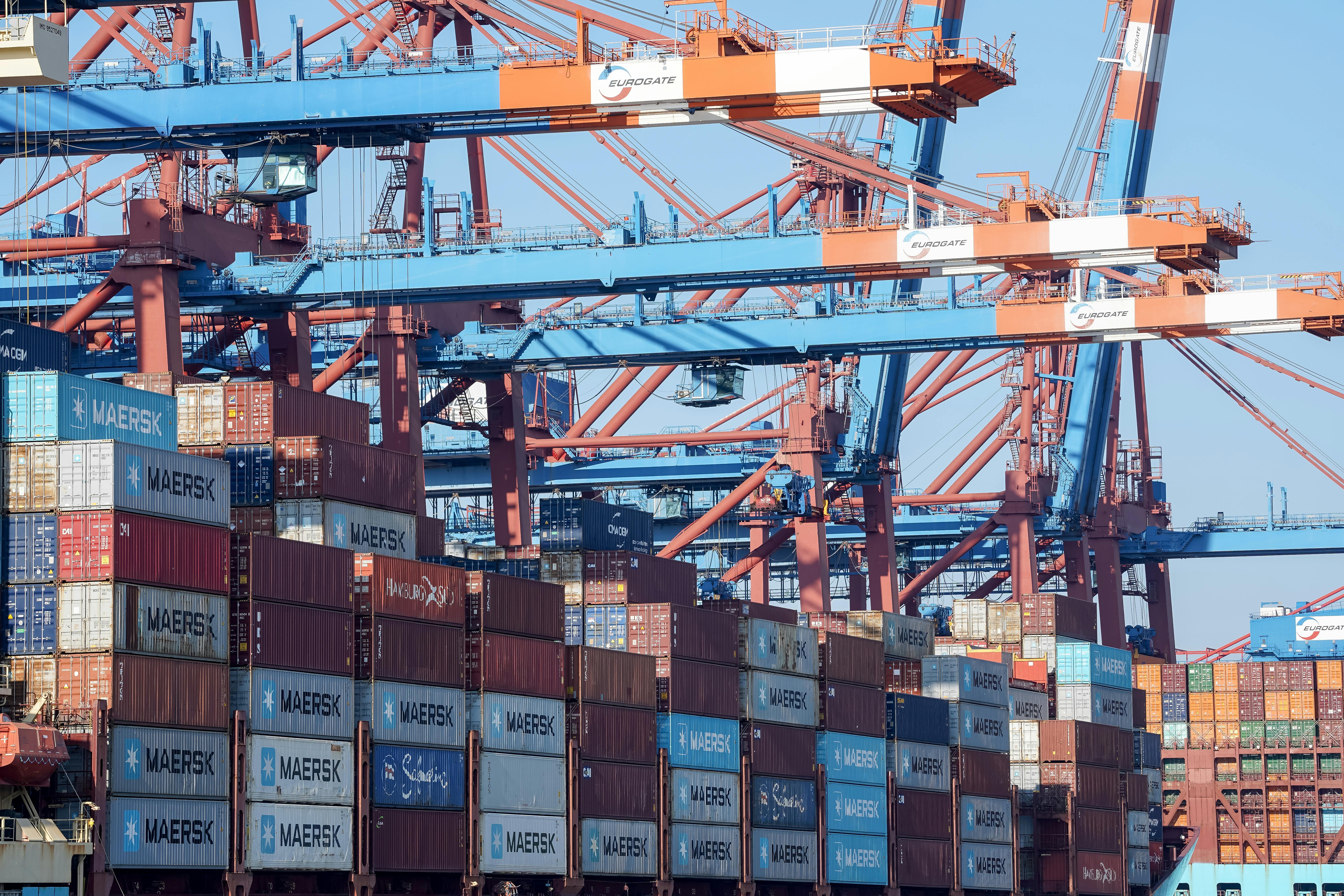
When a ship's master sacrifices cargo or incurs extraordinary expense to save a voyage, maritime law spreads that loss across everyone with property aboard. The principle is very old and remains in force.
The underlying logic
If cargo must be jettisoned or a vessel towed to safety, the action benefits all interests aboard, not only the party whose goods happen to be sacrificed.
Leaving the loss where it fell would make the outcome depend on which containers were nearest the crane, which is arbitrary as between shippers.
General average therefore requires the loss to be shared in proportion to the value of each interest saved, including the vessel itself.
What qualifies
The sacrifice or expenditure must be extraordinary, intentional, reasonable, and made for the common safety when the venture is genuinely in peril.
Ordinary losses from heavy weather do not qualify, because nothing was deliberately sacrificed and no extraordinary expense was incurred to save the whole.
Typical qualifying events include jettison of cargo, deliberate flooding to control a fire, salvage payments and the cost of putting into a port of refuge.
The declaration and its consequences
When general average is declared, cargo is generally not released until each owner provides security, usually a bond and a guarantee from an insurer.
This applies to every consignment aboard, including those entirely undamaged, which is how a shipper with intact cargo comes to be involved.
Because the adjustment can take a long time to calculate, the security requirement rather than the eventual contribution is what most shippers experience.
Adjustment is a specialist calculation
An average adjuster determines the total sacrificed value and expenses, values each interest at destination, and calculates the contribution due from each.
The process requires documentation from every cargo owner and can extend over years on a large casualty with thousands of containers.
The rules applied are set out in a widely adopted set of conventions incorporated into bills of lading, and those rules have been revised several times.
Why insurance is the practical answer
Cargo insurance normally covers general average contributions, which is why the requirement is manageable for insured shippers and a serious problem for uninsured ones.
An uninsured shipper must post security in cash to release goods, and the amount can be a substantial proportion of the cargo's value.
This is the most concrete reason marine cargo cover is treated as routine rather than optional, even for shipments of moderate value.
Questions readers ask
When is air freight justified?
When freight is a small share of product value, when the selling window is short, or when the alternative is a stockout with a larger cost. It is a planning tool as much as an emergency one.
Does rail always beat sea on time?
On continental corridors it is generally faster than an equivalent sea routing. Reliability varies by corridor and season, so the variance should be checked alongside the average.
Also by Rukmini Pathak
- Minimum Efficient Scale, and Why Some Plants Have to Be EnormousManufacturing
- Why Freight Is Priced by Route Rather Than by DistanceShipping & Logistics
- Incoterms: Three Letters That Decide Who Owns the ProblemShipping & Logistics
- Bigger Ships Need Bigger EverythingShipping & Logistics