Shipping & Logistics
Why the Last Mile Costs More Than the Ocean Leg
The final delivery stage resists the consolidation that makes long-haul transport cheap, because each stop serves one customer and the vehicle spends most of its time not moving.

Moving a container across an ocean can cost less than delivering its contents across a city. The reversal is not a pricing anomaly but a direct consequence of how each stage achieves its efficiency.
Long-haul transport spreads cost across volume
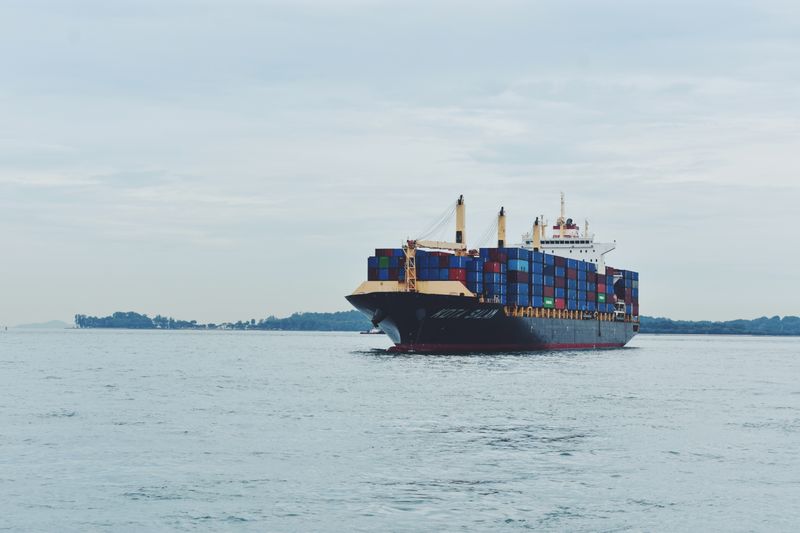
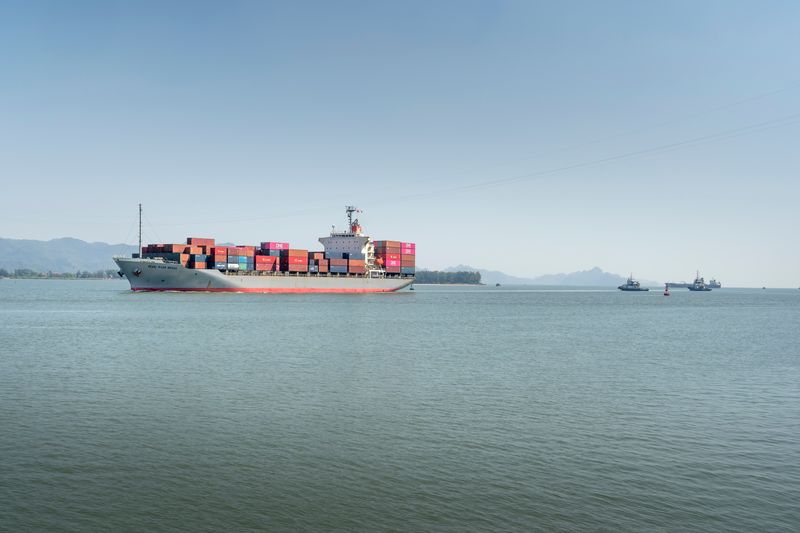
An ocean vessel carries many thousands of containers on one voyage with a small crew, so the fixed costs of the journey divide across an enormous quantity of cargo.
The route is fixed, the loading is mechanised and repetitive, and the same operation repeats identically for every box.
Under those conditions, cost per unit falls dramatically with scale, which is what makes intercontinental freight cheap relative to the value carried.
Final delivery cannot consolidate
The last stage delivers to individual addresses, and each address requires its own stop regardless of how small the consignment is.
A vehicle making many stops spends most of its working time stationary or manoeuvring rather than travelling, so distance covered is a poor measure of the work done.
Cost is therefore driven by the number of stops and the time each takes, neither of which improves with larger volumes across a city.
Density is the main variable
Where deliveries are close together, the driving time between stops is short and more can be completed per shift, so cost per delivery falls.
In sparse areas the same number of deliveries consumes far more time, which is why rural and remote surcharges exist and why they can be large.
This is also why delivery firms compete intensely for volume in specific areas, since additional density on an existing route is close to free.
Failed deliveries multiply the cost
A delivery attempt where no one is present consumes the full cost of the stop and produces nothing, and the parcel must then be attempted again or held.
Since a meaningful share of residential attempts fail, the effective cost per completed delivery is higher than the cost per attempt.
Collection points and locker networks exist largely to address this, converting many individual stops into one consolidated stop with no failure risk.
Urban constraints add further cost
City deliveries face restricted access hours, limited kerbside space, congestion and parking enforcement, all of which lengthen the time each stop takes.
Vehicle access rules based on emissions or size are applied in a growing number of cities, and they differ between them.
Because such rules are set locally and change over time, operators plan urban routes around a set of constraints that vary from one municipality to the next.
Questions readers ask
When is air freight justified?
When freight is a small share of product value, when the selling window is short, or when the alternative is a stockout with a larger cost. It is a planning tool as much as an emergency one.
Does rail always beat sea on time?
On continental corridors it is generally faster than an equivalent sea routing. Reliability varies by corridor and season, so the variance should be checked alongside the average.
Also by Rukmini Pathak
- Minimum Efficient Scale, and Why Some Plants Have to Be EnormousManufacturing
- Why Freight Is Priced by Route Rather Than by DistanceShipping & Logistics
- Incoterms: Three Letters That Decide Who Owns the ProblemShipping & Logistics
- Bigger Ships Need Bigger EverythingShipping & Logistics