Manufacturing
Contract Manufacturing and Whose Name Ends Up on the Product
Brand owners frequently design products that someone else builds entirely, an arrangement that separates design and marketing from production capital and changes where capability accumulates.

Many products are designed, branded and sold by one firm and physically made by another. The arrangement is standard across electronics, pharmaceuticals, food and clothing, and it reshapes where capability sits.
The division of activity
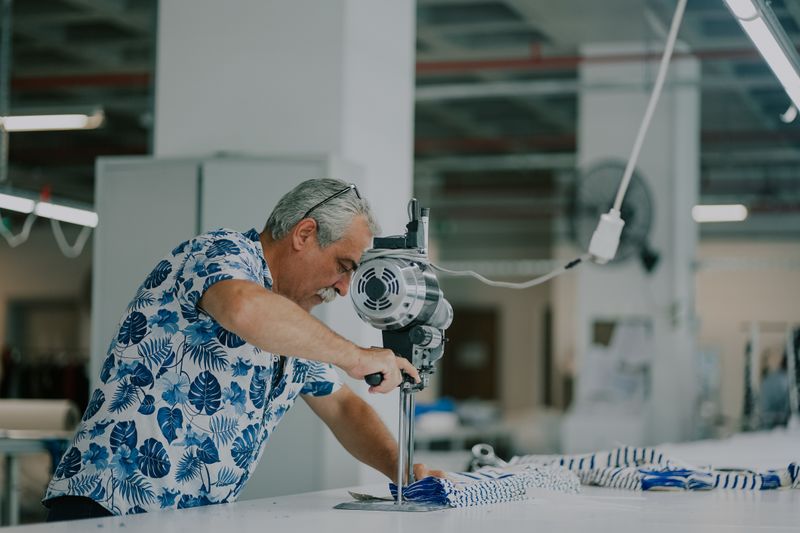
In the usual form, the brand owner specifies the product, owns the design and controls how it is sold, while the contract manufacturer supplies plant, process engineering and labour.
Responsibility for buying components can sit on either side, and which party holds it determines who carries inventory risk when demand or specifications change.
Contracts define quality standards, capacity commitments and the treatment of intellectual property, since the manufacturer necessarily learns how the product is built.
Why brand owners use it
Building a factory requires capital tied to a specific process and volume, committed years before demand is known and difficult to redeploy if the product does not sell.
A contract manufacturer spreads that capital across many customers, so utilisation is higher and the cost per unit lower than a single brand could achieve alone.
It also converts a fixed cost into a variable one, which suits firms whose products have short lives or uncertain volumes.
Why the manufacturer accepts thin margins
Contract manufacturing typically earns a modest percentage on a large revenue base, because the service is capacity and execution rather than a differentiated product.
Volume across multiple customers is what makes the model work, allowing purchasing scale, high equipment utilisation and specialised process expertise.
The competitive position rests on cost, reliability and the difficulty of moving a qualified product elsewhere rather than on any exclusive claim to the design.
Capability accumulates on the factory floor
Detailed knowledge of how to make something reliably at volume develops through doing it, and it develops wherever the doing happens.
Over time, contract manufacturers accumulate process capability that the brand owner does not have and could not quickly rebuild.
Some have used that position to move into design and eventually into products of their own, which is a recurring pattern rather than an exception.
The switching problem
Moving production between contract manufacturers requires transferring tooling, requalifying the process and often re-approving the product with regulators or customers.
That work takes months and carries yield and quality risk, so the relationship is far less flexible in practice than the contractual arrangement suggests.
Brand owners manage this by qualifying second sites in advance or by retaining ownership of tooling, both of which reduce the cost advantage the model was chosen for.
Questions readers ask
Does this mean bilateral trade deficits are meaningless?
They measure gross flows accurately. They are a poor proxy for where value was created, which is why value-added measures were developed alongside them.
Is assembly work worth attracting?
It brings employment and can be a route to upstream capability, which several economies have followed. Whether it stays an entry point or becomes an endpoint depends on what is built around it.