Manufacturing
Labour Cost Is a Smaller Share of the Bill Than the Argument Assumes
Wage comparisons dominate discussion of where things are made. For many products, direct labour is a modest fraction of what the product costs.

There is a short answer about the share of labour in production cost and a useful one, and they are not the same. What follows is the useful one.
The short version
- Materials frequently exceed direct labour in a manufactured product's cost.
- Wage differences must be adjusted for productivity to mean anything.
- Logistics, energy, capital and reliability enter the same comparison.
Where the money in a product goes
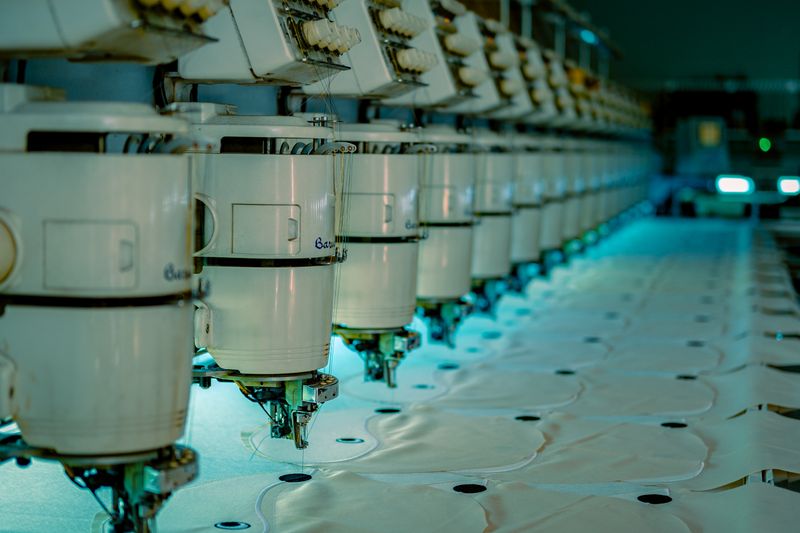
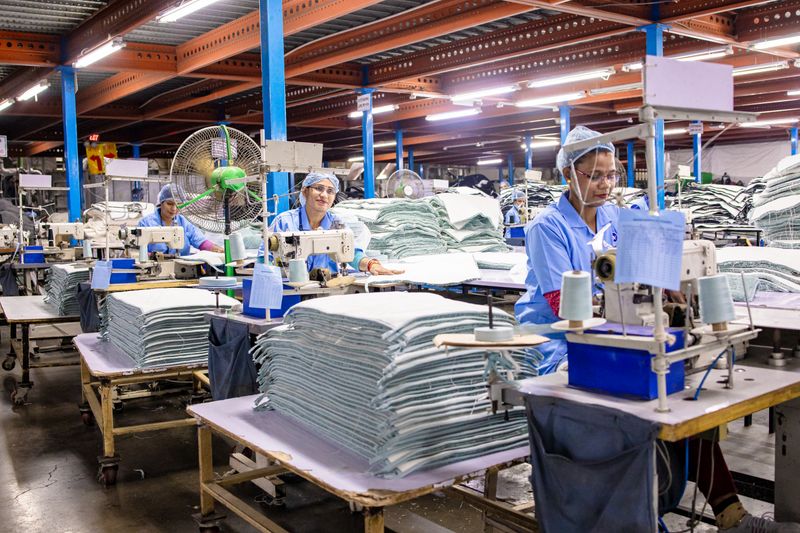
Break a manufactured good into materials, direct labour, energy, capital recovery, logistics, overhead and margin, and labour is often not the largest slice. For assembled electronics and vehicles, purchased components typically dominate, and those components have their own cost structures. Direct labour tends to be more significant in garments, footwear and hand-finished goods, which is why those industries relocate most readily.
Generalising from labour-intensive sectors to manufacturing as a whole overstates the role of wage differences considerably. The share varies so much by product that any universal claim about it is wrong for most goods.
Wages and productivity are one number
A wage that is a fraction of another country's means little without knowing how much output each hour produces. Unit labour cost, which divides compensation by output, is the comparison that actually matters for competitiveness.
High-wage locations frequently have low unit labour costs because capital intensity and process quality raise output per hour. This is why some expensive countries retain substantial manufacturing while some low-wage ones struggle to attract it. Quoting hourly wages without productivity is the single most common error in discussions of manufacturing location.
The costs that travel with the decision
Moving production further from customers adds freight, inventory in transit and longer response times to demand changes. Energy prices, water availability, land cost and the reliability of electricity supply all differ and all enter the calculation. Regulatory compliance, permitting timelines and the predictability of administration matter to capital-intensive investments particularly.
On the manifest, the cost of quality failures, including recalls and rework, weighs heavily where the process is demanding. A comparison built on wages alone omits most of the variables that actually decide the outcome.
Why labour still drives some decisions
In sectors where direct labour is a large share and processes resist automation, wage differences translate almost directly into cost differences. Sewn goods remain the standard example, because handling limp fabric has proven persistently difficult to mechanise fully. In those sectors production has historically migrated repeatedly as wages rose in successive locations.
The pattern is well documented and is a reasonable expectation for any industry with a similar cost structure.
It is not a reasonable expectation for capital-intensive processes where labour is a small fraction of cost.
Automation changes the weighting
As automation raises capital intensity, labour's share falls and the cost of capital and energy rises in importance. That shifts the relevant comparison towards financing cost, electricity price, equipment servicing and technical workforce availability.
It does not automatically favour high-wage countries, since capital and equipment are internationally mobile and available everywhere. What it does favour is locations with reliable infrastructure and technicians able to keep complex equipment running. Maintenance capability becomes a location factor in a way it was not when processes were labour-intensive.
Trade data lags by months and is revised afterwards, so recent figures are provisional.
Reading location decisions properly
Firms making these decisions typically model total delivered cost over a decade rather than comparing a single input price. Market access, customer proximity, currency exposure and policy stability all enter that model alongside operating costs. Because the inputs are firm-specific, two competitors can rationally reach opposite conclusions about the same two locations.
Over a shipping cycle, public discussion tends to reduce this to wages because wages are the one number that is easy to find and compare. The simplification is understandable and it produces conclusions that the underlying arithmetic does not support.
The takeaway
Compare unit labour cost including productivity, not hourly wages. This is general information about manufacturing economics, not financial advice.
Somebody pays the tariff. The argument is only ever about who.
Questions readers ask
If labour is a small share, why did so much production move?
Because it moved most in the sectors where labour was a large share, and because market access, supplier ecosystems and scale followed. The migration was concentrated rather than uniform.
Does a wage increase in a producing country push production elsewhere?
In labour-intensive sectors it can, over years. In capital-intensive ones the effect is much weaker because labour is a smaller fraction of total cost.