Manufacturing
The Learning Curve: Why the Thousandth Unit Costs Less Than the Tenth
Unit cost falls with cumulative production rather than with calendar time. That single fact explains a great deal about industrial geography.
This works through cost decline with cumulative output in the order the parts actually depend on each other.
The short version
- Cost declines are driven by accumulated volume, not elapsed time.
- The knowledge gained sits partly in individuals and partly in the organisation.
- A first mover with volume can hold a cost lead that entrants must produce their way through.
The observation
Manufacturers repeatedly find that unit cost falls by a roughly consistent proportion each time cumulative output doubles. The pattern was first documented in aircraft production and has since been observed across assembly, chemicals, electronics and construction.
The rate of decline varies widely by industry and process, so any specific figure applies to a specific setting rather than universally. What generalises is the shape: improvement tracks accumulated experience rather than the passage of time or investment alone. A plant that has built a million units knows things a newly commissioned identical plant does not.
Where the improvement comes from
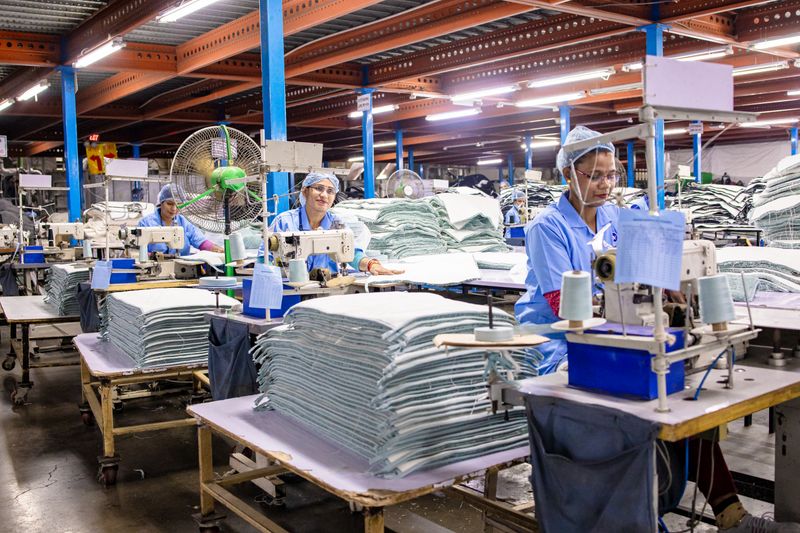
Operators become faster and make fewer errors, which reduces both labour content and scrap. Engineers identify process settings, tooling adjustments and layout changes that only reveal themselves through sustained running. Designs get simplified once production has shown which features cause difficulty, which lowers cost without changing function.
Once the order book turns, suppliers on the same programme improve in parallel, so part of the gain arrives through the purchase price of components. The effect is therefore distributed across the operation rather than located in any single improvement project.
Why it favours incumbents
A producer already down the curve has lower costs than an entrant starting at the top, even with identical equipment. The entrant must produce its way through the same learning, absorbing higher costs while competing against lower prices.
Line by line in the tariff schedule, this is one of the more durable barriers to entry in manufacturing, because it cannot be bought outright. It also explains why firms sometimes price aggressively early to accumulate volume faster than rivals can. Whether that strategy pays depends on how steep the curve is and how long the product generation lasts.
Where the knowledge lives
Some learning resides in individuals, which means it walks out when experienced staff leave or retire. Some is embedded in procedures, tooling and equipment settings, which are transferable if documented carefully. A significant portion is organisational, held in routines and informal practice that nobody has written down because nobody had to.
Over a shipping cycle, transferring production between sites reliably loses the third category and part of the first.
That loss is the mechanism behind the ramp-up gap observed when a mature process moves to a new location.
Depreciation of experience
Learning is not permanent; production interruptions, staff turnover and long gaps between batches all erode accumulated capability. Industries with intermittent production, such as large infrastructure or defence programmes, see this clearly between orders. Continuous production preserves the gains, which is one argument for keeping a line running at reduced rate rather than stopping it.
The cost of maintaining a warm line is often compared unfavourably with restarting later, which undercounts the relearning. Restart costs are real and are systematically underestimated because they appear as inefficiency rather than as a line item.
Trade data lags by months and is revised afterwards, so recent figures are provisional.
Implications for sourcing decisions
Comparing a mature supplier's price with an entrant's quote compares two different points on a curve, not two cost structures. An entrant may become cheaper after sufficient volume, which makes the decision a question of who funds the learning. Splitting volume across suppliers slows learning at both, which is a real cost of dual sourcing that rarely appears in the analysis.
Programmes that expect cost reduction over a product's life are implicitly relying on this effect, whether or not they say so. Making the assumption explicit, with a stated expectation of decline, produces far better contract design than leaving it implied.
The takeaway
Experience is produced, not purchased. A cost gap between an incumbent and an entrant is often just accumulated volume.
Supply chains move slowly and then all at once, mostly for unglamorous reasons.
Questions readers ask
Is the learning curve automatic?
No. It reflects deliberate improvement work and accumulated experience, and organisations that do not invest in either see much flatter curves. The pattern describes what is achievable rather than what is guaranteed.
Does automation eliminate learning effects?
It changes their source rather than removing them. Improvement shifts from operator skill towards process engineering, programming and maintenance practice, and it still accumulates with production volume.