Manufacturing
Takt Time and Why a Whole Line Moves at One Speed
An assembly line runs at a single rhythm set by required output, so every station is designed around that interval and the slowest one determines what the line can do.

An assembly line does not run as fast as its machines allow. It runs at one rhythm derived from how many units are needed in the available time, and every station is built to that interval.
The interval comes from demand
Takt time is calculated by dividing the working time available in a period by the number of units required in that period, giving the seconds available per unit.
It is therefore a requirement rather than a measurement: it states how often a finished unit must emerge for the schedule to be met.
Because it derives from demand, it changes when volumes change, and reconfiguring a line to a new takt is a substantial engineering exercise rather than a dial adjustment.
Work is divided to fit the interval
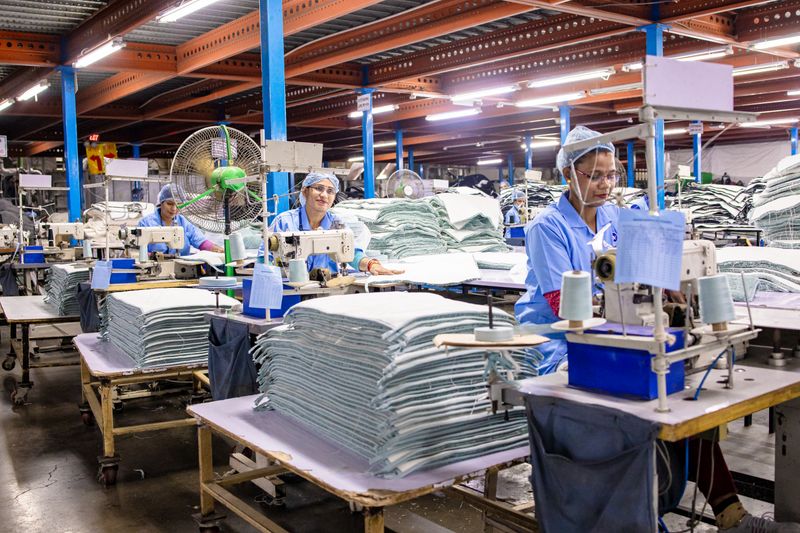
Total assembly work is broken into station tasks, each of which must be completable within the takt interval by the operator or equipment assigned to it.
Balancing that division is the core design problem, since tasks cannot always be split arbitrarily and some must remain together for technical reasons.
Stations with less content than the interval sit idle at the end of each cycle, which is visible waste but is often preferable to an unbalanced alternative.
The slowest station governs everything
A line moves as one system, so any station exceeding the interval delays every station downstream and the line's actual output falls to that station's rate.
This makes bottleneck identification the central improvement activity, since effort spent speeding up any other station produces no additional output at all.
Once a bottleneck is relieved, the constraint moves to whichever station is now slowest, so the improvement work is continuous rather than one-off.
Buffers decouple sections
Small inventories between line sections allow one section to continue briefly when another stops, which prevents every minor interruption from halting the entire line.
Larger buffers absorb more disruption but hide problems, delay their discovery, and tie up capital in partly finished units.
Deciding buffer size is therefore a deliberate trade-off between line stability and the visibility that drives problem-solving, and different production philosophies resolve it differently.
Product mix complicates the rhythm
Lines producing several variants face different work content per unit, so a station that fits within the interval on one variant may exceed it on another.
Schedulers address this by sequencing variants so that heavy and light units alternate, keeping the average within the interval across a run.
When the actual order mix departs from the assumed pattern, the line loses output even though no station has become slower, which is why mix discipline matters as much as volume.
Questions readers ask
Does this mean bilateral trade deficits are meaningless?
They measure gross flows accurately. They are a poor proxy for where value was created, which is why value-added measures were developed alongside them.
Is assembly work worth attracting?
It brings employment and can be a route to upstream capability, which several economies have followed. Whether it stays an entry point or becomes an endpoint depends on what is built around it.